

Café · Montreal · ⭐ 9.1/10 · 1332 reviews · updated: 2026-08-10 15:33:15
Address: 1635 Rue Clark, Montréal, QC H2X 2T1, Canada
The name is a confession. Pikolo Espresso Bar comes from the Italian piccolo, meaning small, and the place has kept its word: a compact room, a short counter, a seat count you can tally on sight. What that format produced, though, has been anything but small. Since 2011 Pikolo has been one of the addresses that genuinely moved the level of specialty coffee in Montreal, and one of the very few to have done it without ever roasting a single bean itself.
Highlights
- A founder trained in Australia. Marie-Ève Laroche spent roughly a year there studying coffee growing, roasting and preparation before opening. The project came out of an apprenticeship rather than a business plan.
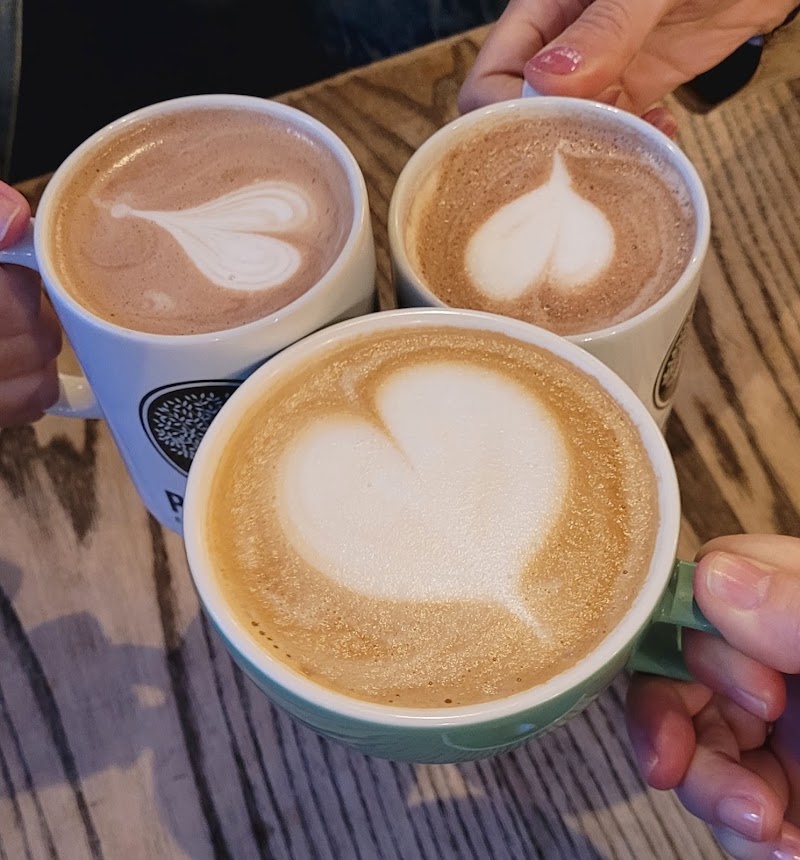
- The Pikolo Latte, the house drink. The piccolo is an Australian café staple — a short, concentrated latte — and it gave the bar both its name and its house style in the cup.
- A multi-roaster house. Pikolo does not roast and buys its beans from others: the partners the bar currently puts forward are Montreal houses — Myriade, Traffic, Colorfull — and roasteries from the west of the country have also passed across the counter over the years. The beans rotate; the way they are extracted does not.
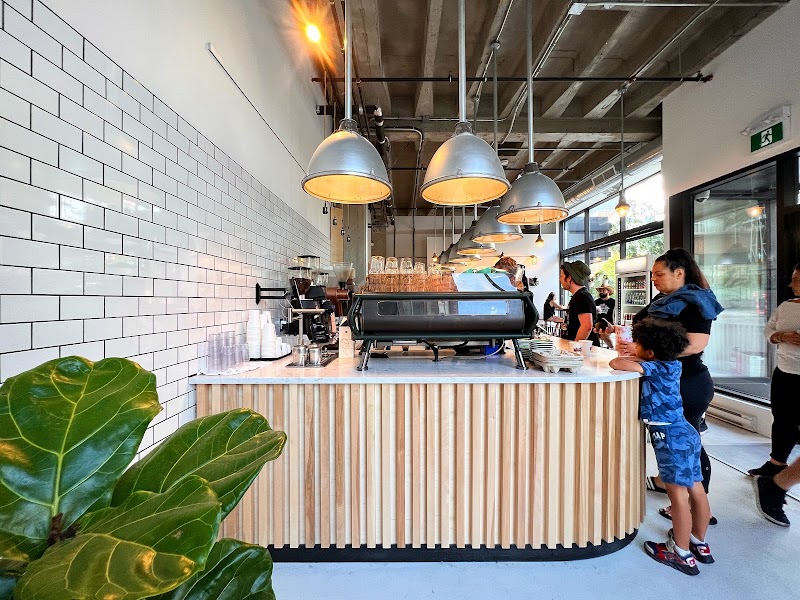
- A custom wood-panelled espresso machine imported from the Netherlands, long the centrepiece of the counter and still the image most people carry away from the place.
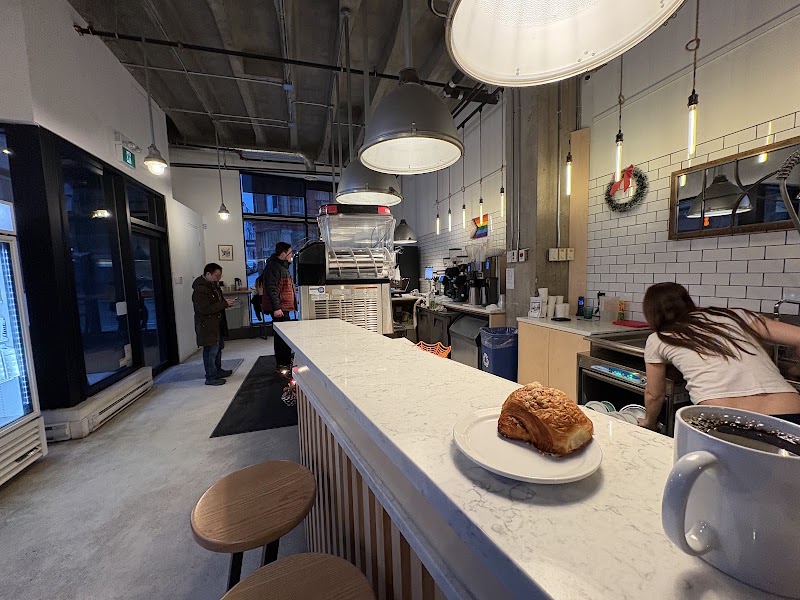
- Pastry comes from city bakeries, Hof Kelsten among them — a house with a reputation of its own rather than an anonymous supplier.
- Opened in 2011 in Milton-Parc, beside the McGill campus, then relocated into the Quartier des Spectacles: the same café, a different district, a clientele that shifted from students to downtown workers.
What’s in the cup
Pikolo is a specialty bar in the strict sense, and its defining structural choice is to be a multi-roaster. In practice that means no fixed house blend: the coffees rotate, a Montreal roastery one month, a British Columbia or Alberta one the next. Myriade, Traffic and Colorfull, all of them Montreal houses, are the partners the bar currently names; over the years roasteries from further afield, such as 49th Parallel in British Columbia or Monogram in Calgary, have taken their turn at the counter as well. The list is not fixed, and that is the whole principle.
For the person drinking, this model has a direct consequence: the cup will not be the same from one season to the next, and that is the point. The team deliberately pushes the individual character of each coffee forward instead of smoothing it into a house profile. Ask what is on the grinder today and where it came from, and you will get an answer without jargon — transparency about origin is part of the implicit contract here.
On method, espresso is the heart of the work, as the name suggests, with the full milk range built around it: the short piccolo, but longer formats too. Filter runs alongside, brewed in batches for anyone who wants a large cup to drink slowly rather than a ristretto taken standing up. The non-coffee side is not treated as a concession: matcha, chai and hojicha hold real space on the counter, and plant-based milks are available.
Who’s behind it
Marie-Ève Laroche founded Pikolo after an extended stay in Australia, where she took an interest in growing, roasting and floor service alike. The detail explains a great deal: the Australian scene built its reputation on espresso designed for milk, on fast service that refuses to compromise on quality, and on the idea that a neighbourhood café is a piece of social infrastructure rather than a point of sale. All three traits show up here.
Back in Montreal in 2011, she opened in Milton-Parc, within walking distance of the McGill campus. At that point the city had very few addresses able to hold a coherent conversation about sourcing and extraction, and Pikolo was part of the small handful that made that conversation ordinary. The move into the Quartier des Spectacles changed the clientele more than it changed the house: the stated philosophy — for the love of coffee and people — stayed exactly where it was.
What kind of visit it suits
Working on a laptop: yes, with one caveat. Historically this has been one of the dominant uses, inherited from the years when the room was full of students. The wireless network works well. The weakness is well known and worth stating plainly: power outlets are scarce. Arrive with a charged battery and treat it as one working session rather than a full day. Nobody will hurry you, but the room is small and table sharing is normal at peak.
Coffee for two, to talk. The short format, the close counter and the acoustics of a small room make conversation easy — provided you accept that it happens within earshot of the next table.
Takeaway between appointments. This is the scenario the district imposes: between the offices, the university and the concert halls, a large share of the volume leaves in a cup. The service is quick without being rushed.
Alone with a notebook. In the flat part of the afternoon the room settles and becomes a very good observation post on the neighbourhood, especially if you take a filter rather than an espresso: the drink lasts longer than the seat.
The room and the atmosphere
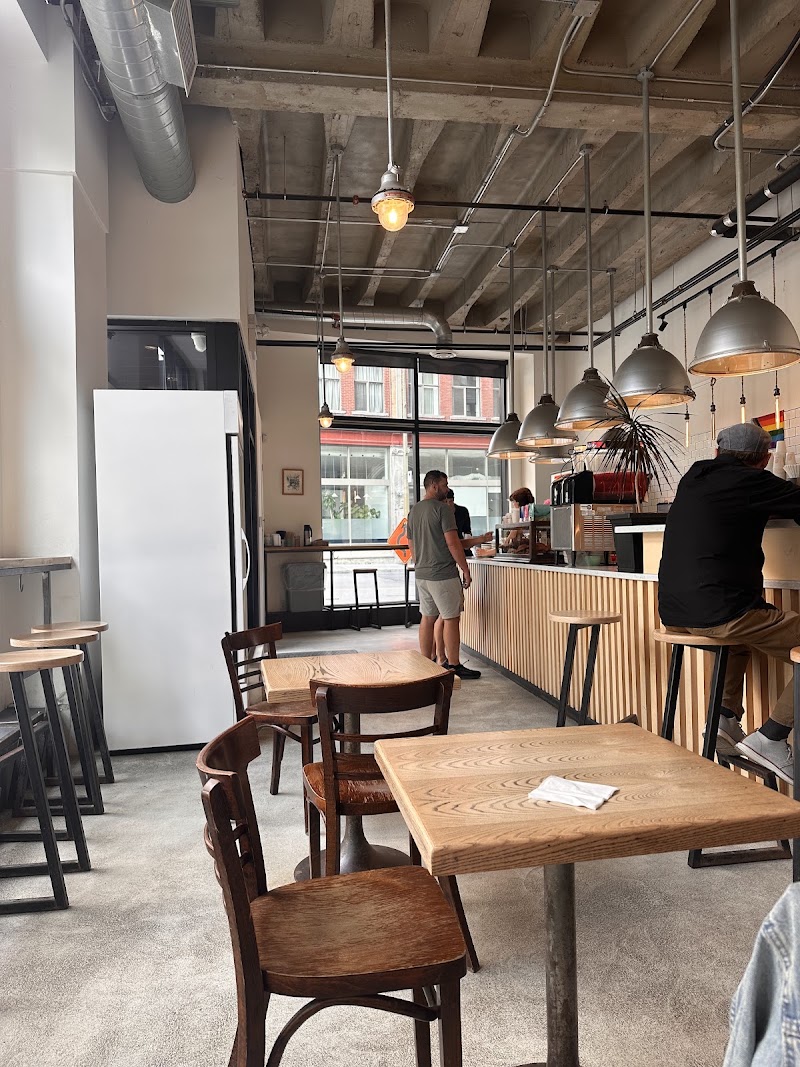
Small, unapologetic, and honest about it. The visual language is industrial — raw materials, clean lines, an uncluttered counter — with the wood-panelled machine as the central object. In its first home, ceiling height allowed a mezzanine to be built in to win a few extra seats, a trick that sums up the house method neatly: chase volume rather than floor area.
The noise level climbs fast. At peak the queue reaches the door, the grinders run, and there is no corner to withdraw into: this is a coffee bar in the literal sense, not a lounge. Sharing a table is routine and done without ceremony. In exchange, you never get the coolness of large rooms where nobody speaks to anybody.
The crowd is characteristic of this district: office workers in the morning, students and freelancers in the afternoon, a theatre-bound public in the early evening. It is one of the few downtown counters where all three populations meet.
What goes with the coffee
Pikolo does not bake and makes no secret of it: the case is stocked by Montreal bakeries, Hof Kelsten among them, a house with a name of its own. That is consistent with the multi-roaster model — rather than doing everything adequately, the bar buys the best of each trade and concentrates its own effort on extraction.
So do not come looking for a full breakfast or a lunch menu. The solid offer is deliberately light and built to accompany a cup, not to replace it. If you actually need to eat, the district has plenty of options within a short walk; here the coffee is the main course.
When to come
The day starts early, ahead of office hours, and finishes in the early evening: the rhythm is downtown, with two sharp peaks — the morning, when the district goes to work, and the late afternoon, when it leaves or heads for a show. Between the two there is a trough, and that is the best moment to sit down.
The weekend changes the nature of the place. The pace is slower, the crowd more local, and a table can be had without negotiation. One local reality is worth flagging: when the big festivals take over the district’s squares, footfall explodes and the queue runs far past its normal length.
Getting there
This is the Quartier des Spectacles, steps from Place des Arts, at the hinge between the business core, Chinatown and the urban campus of UQAM. Place-des-Arts station on the green line is the nearest and comes out practically at the corner; Saint-Laurent station on the same line is the alternative if you are arriving from the east.
On foot, the whole of downtown is within reach: the district is dense and the distances are deceptively short. By bike, protected north-south routes pass immediately nearby and bike-share docks are set around the district’s squares. By car, plan on an underground garage rather than a kerbside space — this is one of the most constrained sectors on the island, and event-related street closures are frequent.
Good to know
Two limits, stated plainly. First, power outlets are scarce, which mechanically caps long working sessions despite a decent connection. Second, the room is small, so at peak you will wait standing and may end up sharing a table.
In exchange, this is one of the few downtown addresses where you can ask what is on the grinder and get a real answer, where the coffee changes often enough to justify coming back, and where within a few weeks you can taste roasteries from three provinces without leaving a counter a few metres long. For anyone interested in Canadian coffee as a whole rather than in one house, it is a hard observation post to beat.
Questions and answers
Does Pikolo roast its own coffee?
No, and that is a declared choice. The bar buys from several Canadian roasteries and rotates the coffees, which means different beans through the seasons rather than one fixed house blend.
What is a Pikolo Latte?
It is the house version of the piccolo, a short, concentrated latte popularised by Australian café culture. It gave the bar its name and remains the best starting point for judging the espresso.
Can you work on a computer here?
Yes, the connection is good and the practice is common, but outlets are few and the room is small. Treat it as somewhere for one working session rather than a whole day.
Who founded it?
Marie-Ève Laroche, who opened in 2011 after around a year in Australia studying coffee growing, roasting and preparation.
Is there filter coffee?
Yes, brewed in batches alongside the espresso line. It is the right choice if you are staying a while rather than passing through.
Is there food?
Pastries and baked goods from Montreal bakeries, Hof Kelsten among them. There is no kitchen: the solid offer accompanies the cup rather than replacing it.
Has the café moved?
Yes. It opened in Milton-Parc near the McGill campus and later settled in the Quartier des Spectacles. Same house; different district and different crowd.
Are there plant-based milks?
Yes, the usual alternatives are available, and the non-coffee drinks — matcha, chai, hojicha — are taken seriously rather than kept as a fallback.
Opening hours
| Day | Hours |
|---|---|
| Monday | 07:30–19:00 |
| Tuesday | 07:30–19:00 |
| Wednesday | 07:30–19:00 |
| Thursday | 07:30–19:00 |
| Friday | 07:30–19:00 |
| Saturday | 08:00–19:00 |
| Sunday | 08:00–19:00 |
Photos
Visitor reviews
Reviews last updated: 2026-08-10 15:33:15
Data is refreshed monthly. Sources: montrealanka.com and editorial picks based on reviews.
Одне з моїх улюблених місць!
Їхня кава неймовірна, чесно кажучи, просто перлина. Обслуговування надзвичайно привітне та суперщедре!
Кава піколо неймовірна! А мій улюблений – це їхній особливий лате з апельсиновим цвіто…
Їхній мокко та морквяний мафін були дуже смачними! Бариста були дуже приємними та гостинними.
Поїхав до Монреаля на вихідних і знайшов цю кав’ярню біля нашого готелю. Дуже миле і оригінальне місце. Також дуже затишно та ідеально підходить, якщо ви хочете поспілкуватися з друзями або зробити якусь роботу. Дуже спо…
Це справді миле місце для філіжанки кави. Тут просто ідеально все: від лате до сконів. Я куштував їхній шоколадний скон, і він був просто чудовий.
Їхній лате та мокко були такими ідеальними та дивовижними. А ще мистецтво…
Привітання було виключно англійською мовою, що я вважаю недоречним у середовищі, де намагаються захистити французьку мову.
Нас попросили чайові перед тим, як нас обслужили, що мене дуже непокоїло. Я залишив 15% чайових,…